Home / Blog / Different Door Styles, Finishes and Compositions Explained
Different Door Styles, Finishes and Compositions Explained
There are many variables to doors. From the structure, to the style, to the finish, there are options at every stage of construction. Cost, appearance and customisation will all play a role in deciding which doors you need. This post will give you some guidance on the technical terms involved so that you can make an informed (and correct!) choice.
Internal Door Constructions
The core of a door will have the biggest impact on price, insulation, and soundproofing. The differences are based on how the door leaf is built internally. At Aspire, we offer all kinds of
Hollow Core Doors
A hollow core door has a thin veneer of higher quality wood, just like a solid core door. They do have a core, but that core is made of paper or plastic (usually in a honeycomb pattern).Hollow core doors are the most common choice for internal doors. They are lightweight, easy to fit, and affordable. This is usually the determining factor when you consider how many doors the average 3-bed house might need. However, this type of door can feel quite flimsy, and will not do a great job at insulating or soundproofing.Tubular Core Doors are a type of hollowcore door that we have in stock. These doors have an interior that has vertical “tubes” that provide more mass and rigidity than standard honeycomb doors. They have a moderate weight in comparison, and offer better sound insulation. These are best for low-traffic builds with lower costs.
Semi Solid Core Doors
There are two types of semi solid core doors; solid timber, and engineered.
Semi Solid Timber Core Doors use solid timber in key areas of the core. These partially filled solid wood interiors create better sound and thermal insulation than hollow core doors, but cost slightly less than and are slightly heavier than a hollow core door and may cost slightly more. The rest of the core typically uses the honeycomb shaped interior that hollow-core doors use.
You may choose solid timber core if you prefer the solid feel of wooden doors, and are okay with a higher maintenance commitment.
Semi Solid Engineered Core Doorsuse engineered timber in key areas of the core. The engineered core benefits from better humidity and temperature resistance and less overall maintenance. This is ideal for busy households that would still benefit from the sound and thermal insulation that hollow core doors can’t provide.
These doors are best for rooms that need slightly more insulation or are higher traffic - bedrooms and offices would benefit from either of these semi solid core doors.
Solid Engineered Core Door
A solid engineered core will consist of laminated timber, particleboard, or high-density composite - and will be fully solid on the inside.These doors are typically heavy and super durable - making them a great choice for rooms that need more sound and thermal insulation. They’re additionally more stable than solid timber doors - this is because the constructed core is more resistant to the humidity and temperature changes that can cause issues in solid wood doors
The Different Styles of Internal Doors
Visually, the core of a door doesn’t make much difference. All doors can come in a range of styles. Here are a few of the most common styles you could choose between.
Shaker Doors
These doors use clean, simple square edge panels to create a design that suits almost all decors! They feature a flat centered panel and straight lines along the edges, which work great in Scandinavian, minimalist and farmhouse designs. Shaker doors get their name from the Shaker religious community that is known for their simple and functional craftsmanship.Their furniture typically features clean lines, minimal decoration and high practicality. This is a great choice of door in a world where things are constantly fighting for our attention. With these doors, you can make a clean minimalist space that helps soothe your anxieties and turns your home into a super relaxing hideaway.
Modern Doors
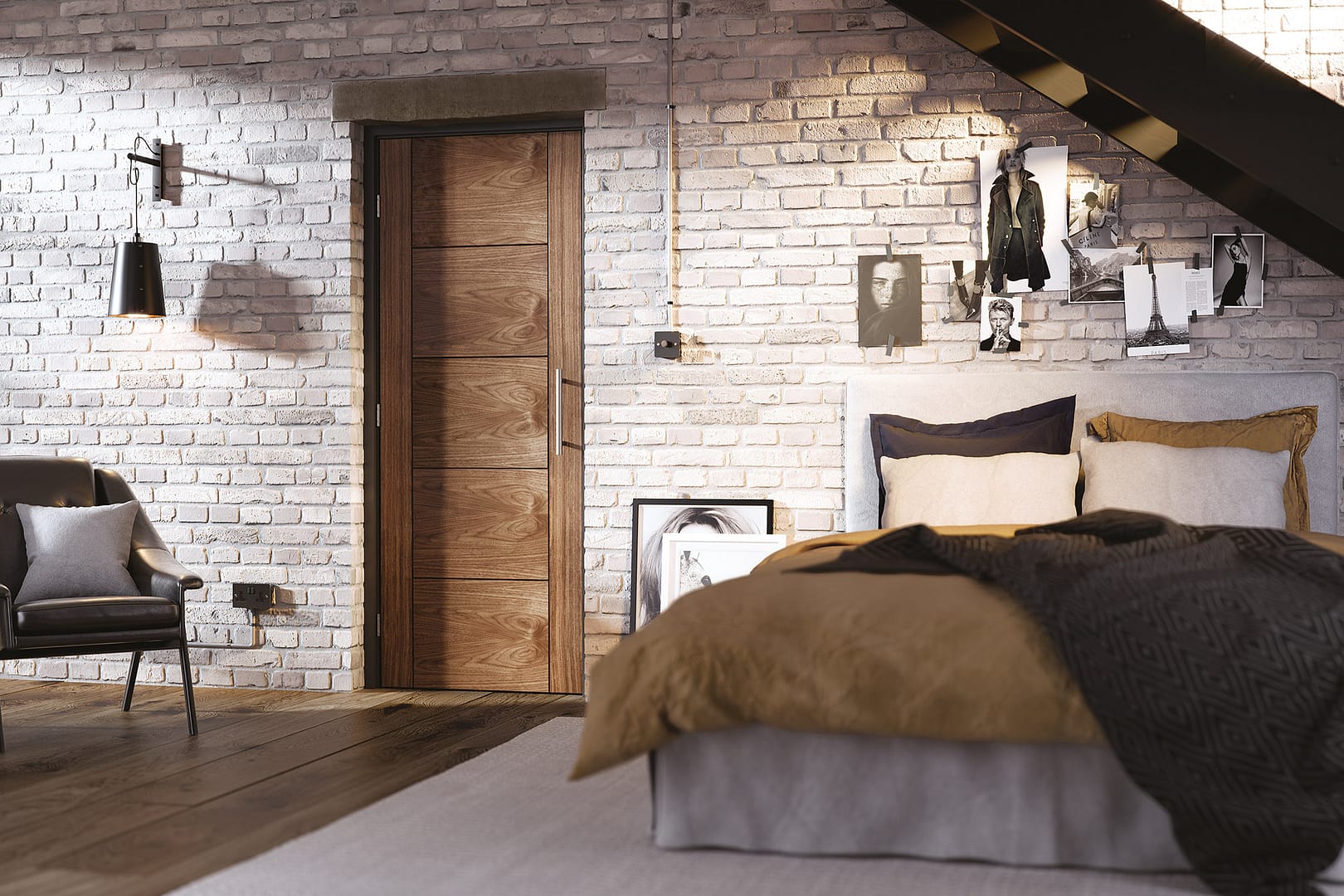
Modern doors (like the ones offered on our website) are typically made with minimalist and industrial designs to suit contemporary apartments and buildings. They come neutral colours like black, white, and timber - all designed to create a cool urban look in your home.Modern doors, like shaker doors, emphasise simplicity and practicality. You won’t find any strong decorative features on these doors, instead you find designs the soothe the mind and feature bold, and durable hardware that will last for years.
Cottage Doors
These doors are made from vertical boards and typically have shallow, natural grooves in the wood. You can find these both with and without glazing and will typically match the aesthetics of a traditional cottage. Mexicano Doors are a type of cottage door that feature regularly spaced vertical boards, with consistent V grooves, and are framed by boards across the length and the top and bottom of the door. These are considered a more modern version of the standard cottage doors.Both doors can be stained or painted to suit any style, but are usually found featuring their natural wooden grain. These doors are not particularly versatile but, as the name suggests, feature perfectly as part of a traditional country cottage décor.
What Are the Different Internal Door Finishes?
Once you’ve chosen the core of your door, and the style of your door, your final decision is what finish you want. There are three main finishes you can choose from, depending on how much work you personally want to put into perfecting your door.
Unfinished
An unfinished door will arrive sanded but otherwise untreated. It offers the most flexibility, and can be customised to match any style. You can decide to either stain and varnish these doors to preserve the natural wood grain, or use a white primer before painting it any colour you’d like. Our unfinished doors can be chosen in both oak and pine, making it easy to find a door to match your budget.
Primed
A primed door is treated with an undercoat to minimise the work you have to do at home. They will be ready to paint from arrival and are a good middle ground if you want a door in a specific colour, with as little hassle as possible.
Pre-Finished, Finished, or Fully Finished
A finished door arrives ready to hang. It will have been treated with a primer undercoat, then painted, stained or varnished, depending on the look. It is the most expensive finish and is the least customisable, but it is easy and hassle-free.Learn more about the differences between prefinished and unfinished doors here.With so many variables involved, choosing a new door can be daunting. Now you should be better placed to make an informed decision to find doors that are as effective as they are attractive in your home.