
Looking for help? Call 020 3744 0704 or email us
Upgrading your home with new internal doors is one of the easiest ways to refresh your space, but there is one crucial step you can’t afford to skip: getting the measurement.
If the thought of pulling out the tape measure makes you nervous, don’t worry – even with measurements that are a few mm off, your doors will likely fit (your installer will likely pack or trim the doors slightly).
This guide will walk you through exactly how and where to measure, the tools you’ll need, and how to choose the right size with total confidence.
Jump to the section you need:

Tape Measure

Square Measure

Notepad or Note App

For larger internal doors, we’ll focus on measuring the structural opening (wall to wall), ignoring trims and frames.
If frames are already installed on the openings, then these should be removed, as all of these doors come with their own frame and track.
This will ensure the doors will function properly. There are two ways you can do this:
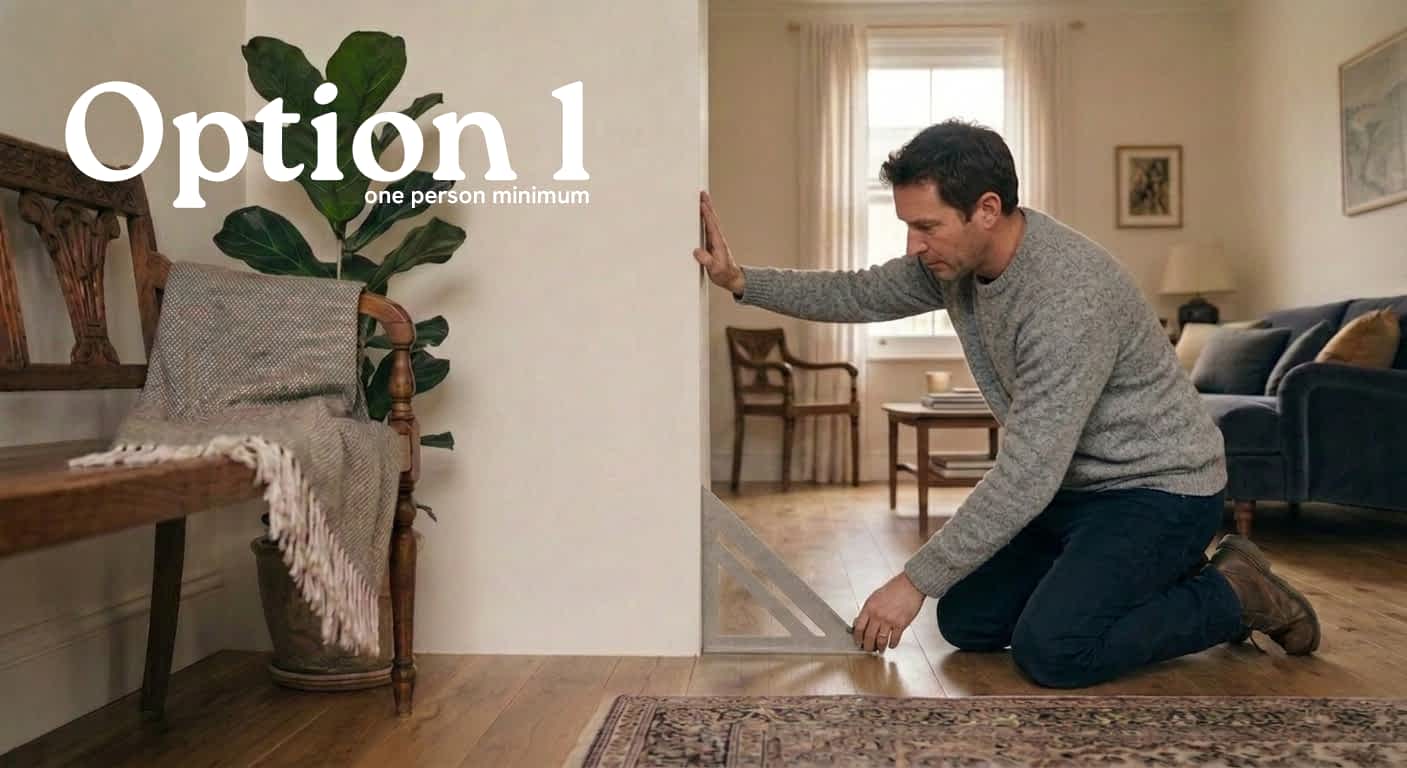
Option 1: Use your square measure
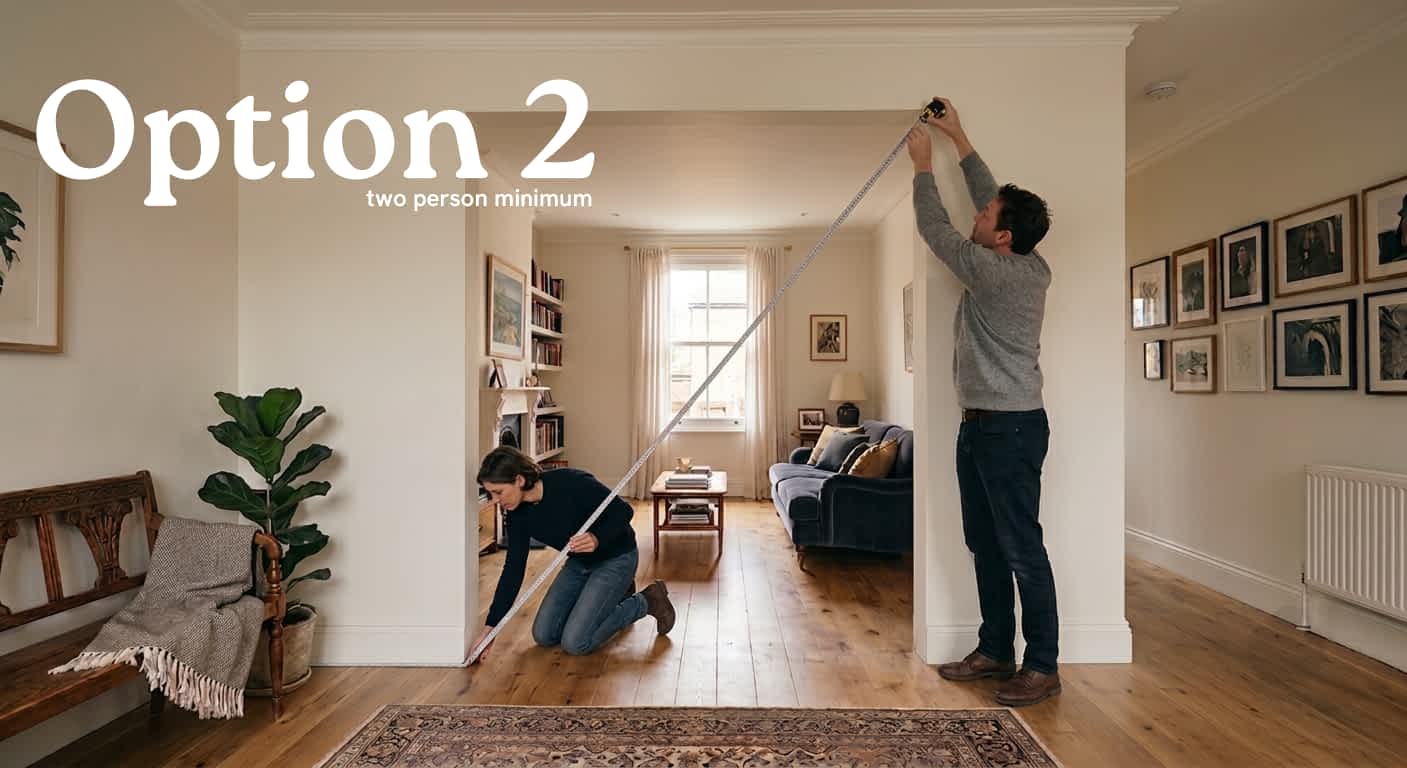
Option 2: Use a tape measure (minimum of two people)

If both measurements are the same, your opening is squared.
If there is more than a 2mm difference in your measurement, then make your builder/ carpenter/ installer aware of this and they will pack out the walls so that they measure square.
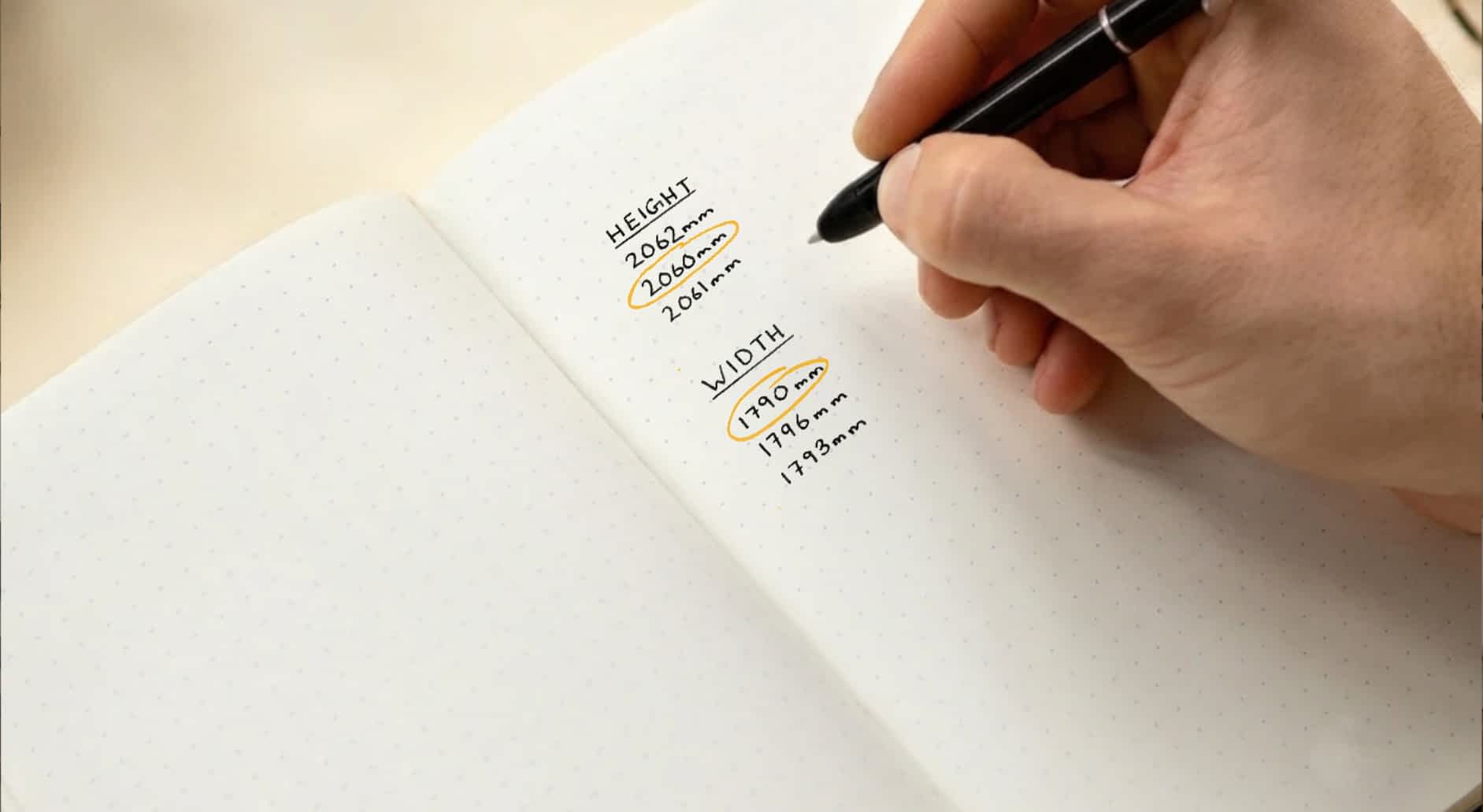
You’ll take three measurements in millimetres.
Height of:
The smallest measurement this is your height.
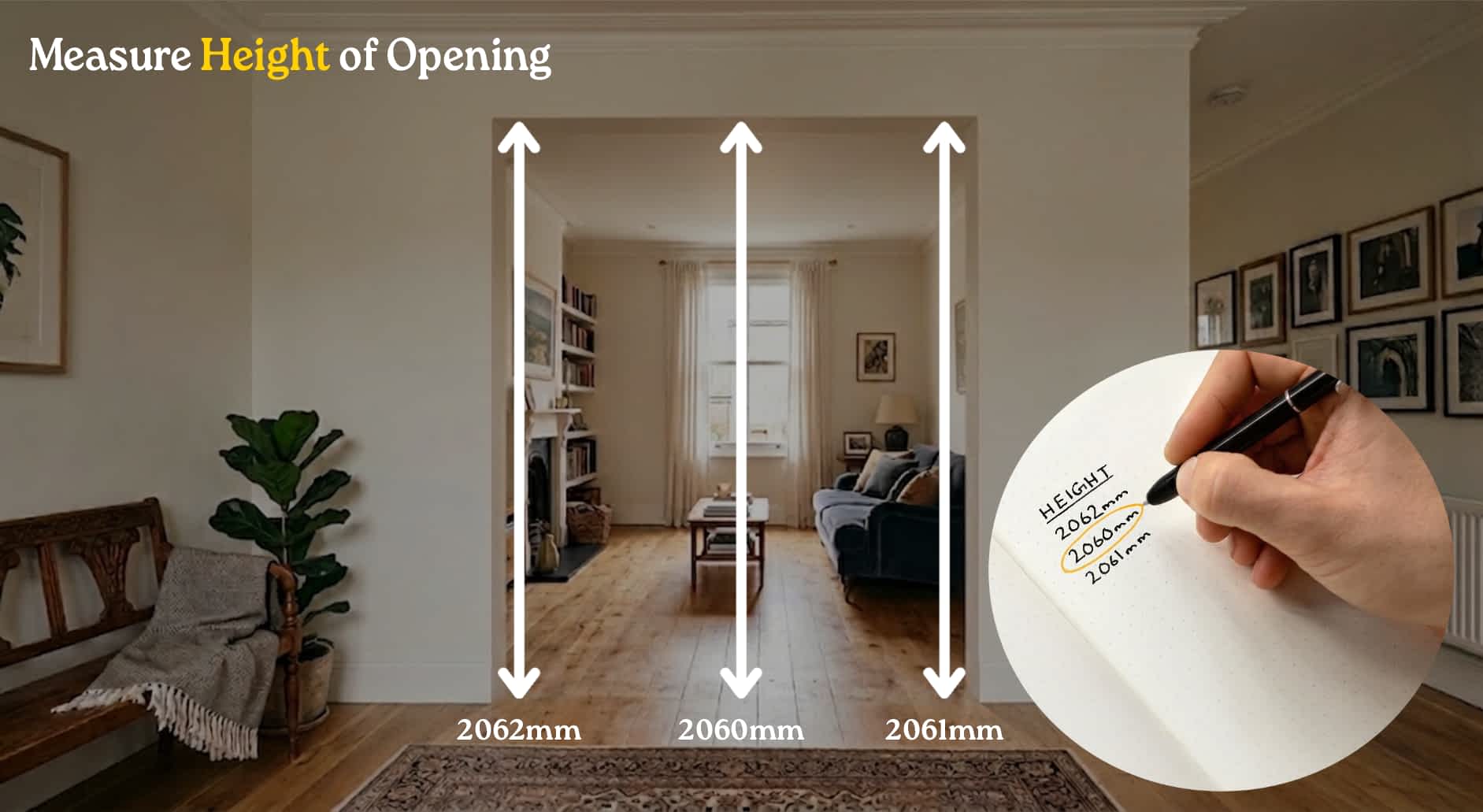
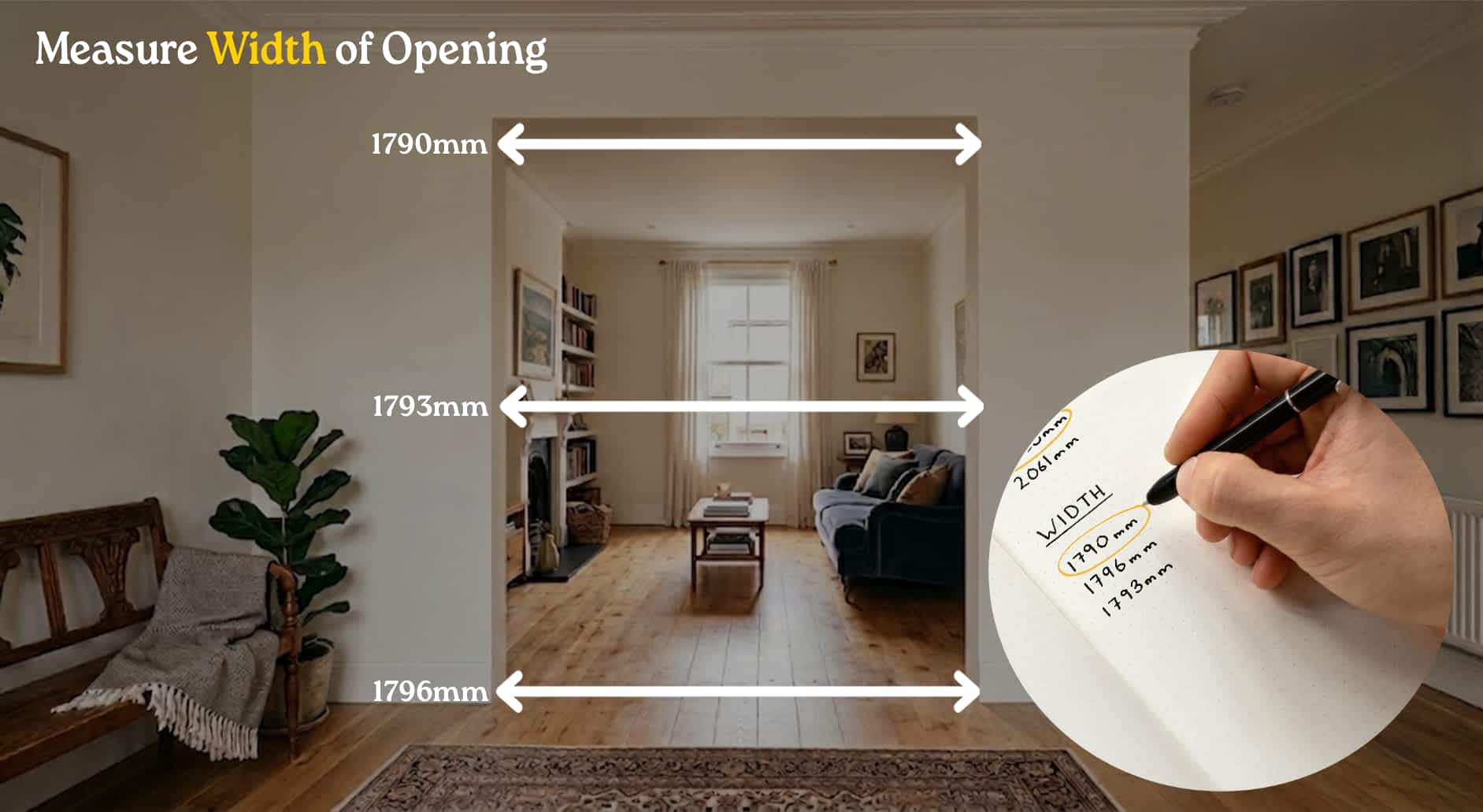
You’ll take three measurements in millimetres.
The length of:
Take the smallest measurement – this is your width.
Head to the product page for the door you’re buying and choose the size with the measurements that are closest to what you’ve written down.
Internal doors can be trimmed or packed to fit the opening.
If you’d like some extra reassurance, you can take a look at the sizing guide next to the different sized products.
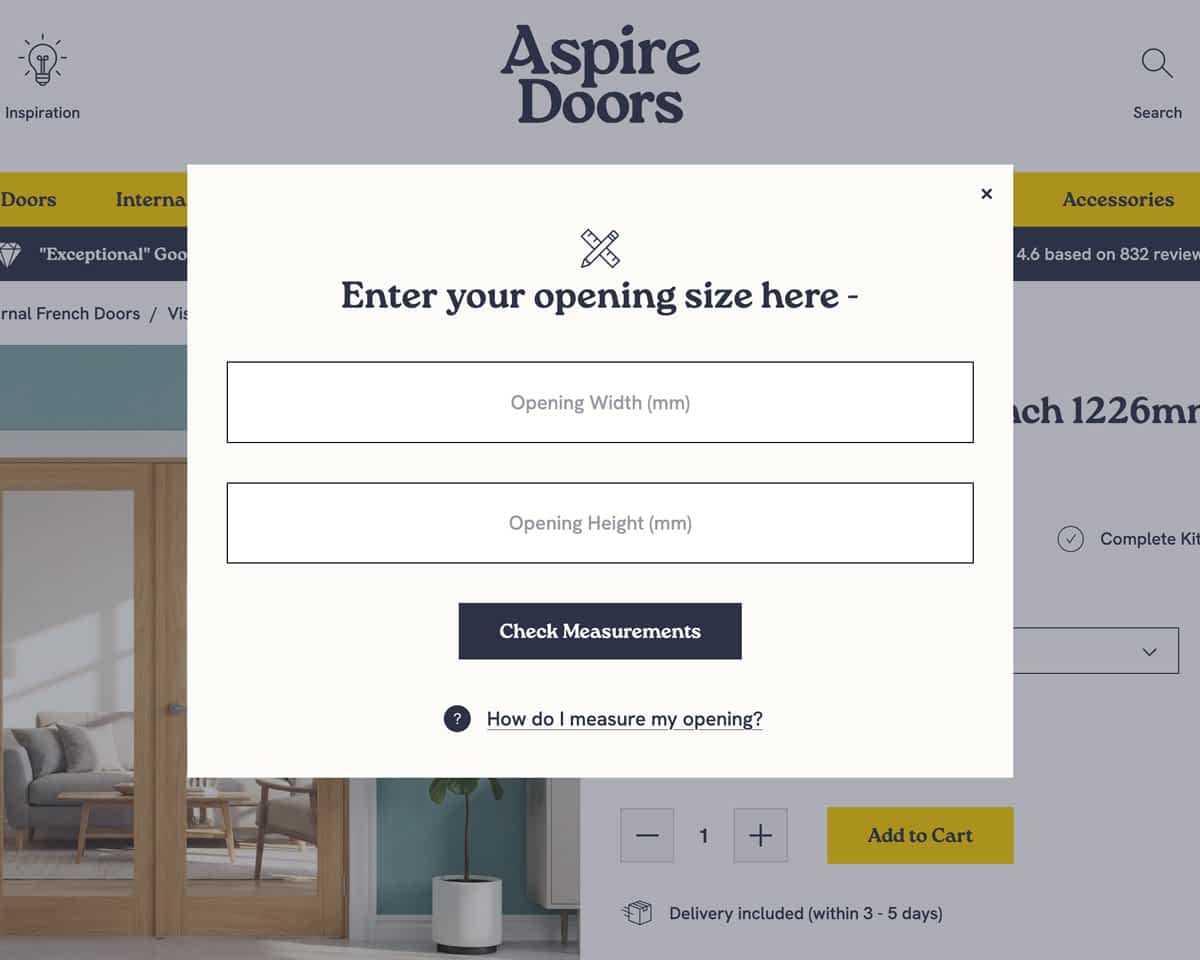
Once you’ve chosen your product size, click the “Will this fit my space” button, enter your measurements and then click “Check Measurements.”
You’ll then be told whether the product that you’ve chosen will fit your measurements or not.
Choose the closest measurement for the required opening. Internal doors can be trimmed or packed to fit the opening (This will be done by the fitter/ carpenter/ installer), so choosing a measurement very close to the size you need will work just as well
Note: Each product has two measurements: the required opening and the product size. The required opening is the measurement that you should focus on.

Internal doors are measured from frame to frame. Most of our internal doors can be fitted to a standard frame. Unlike larger doors, single doors only need one height measurement.
This will ensure the doors will function properly. There are two ways you can do this:
Option 1: Use your square measure
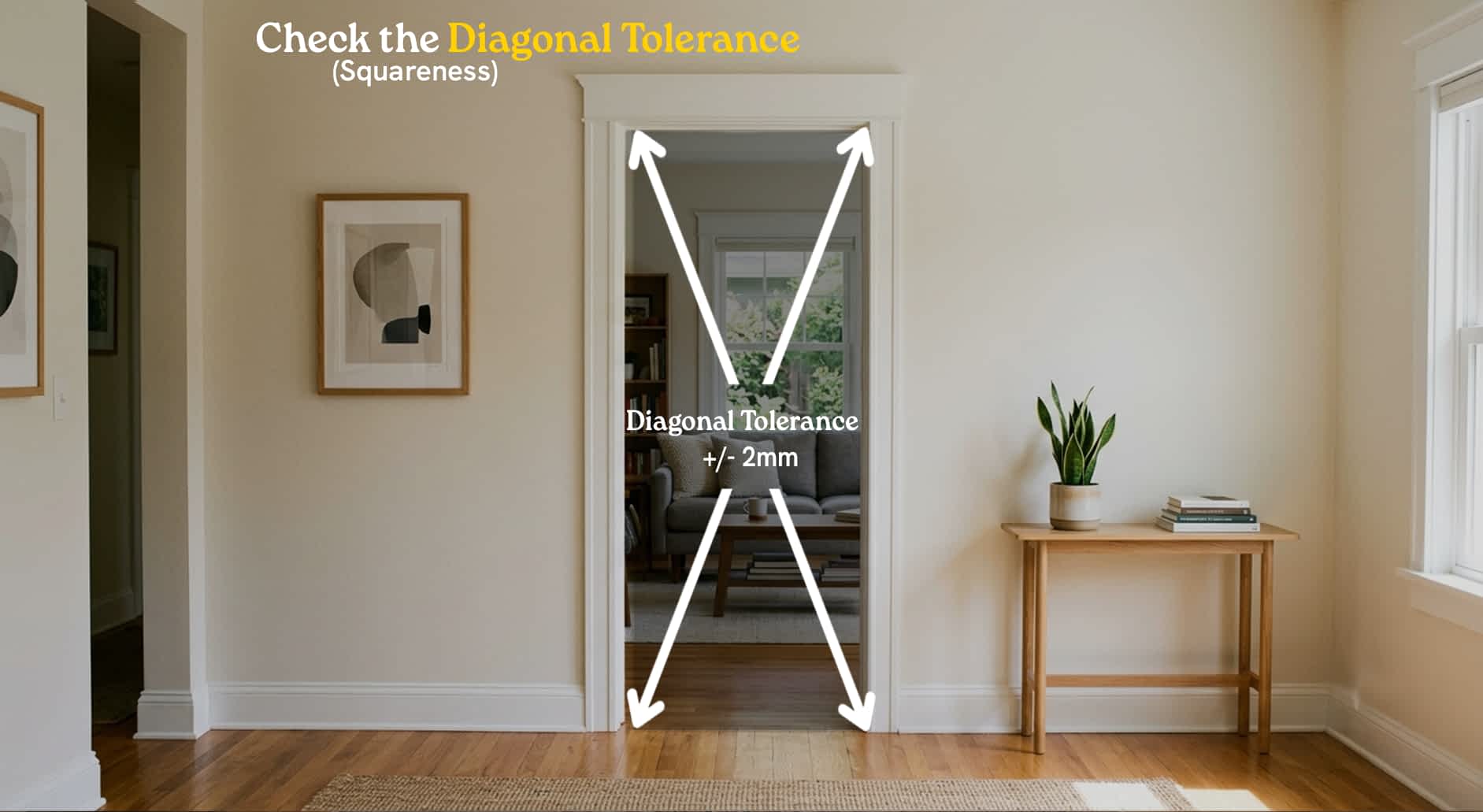
Option 2: Use a tape measure (minimum of two people)
If both measurements are the same, your opening is squared.
If there is more than a 2mm difference in your measurement, then make your builder/ carpenter/ installer aware of this and they will pack out the walls so that they measure square.n the door jamb may need packed or shimmed before the door is ordered.
Use your tape measure and make note of the height in millimetres.
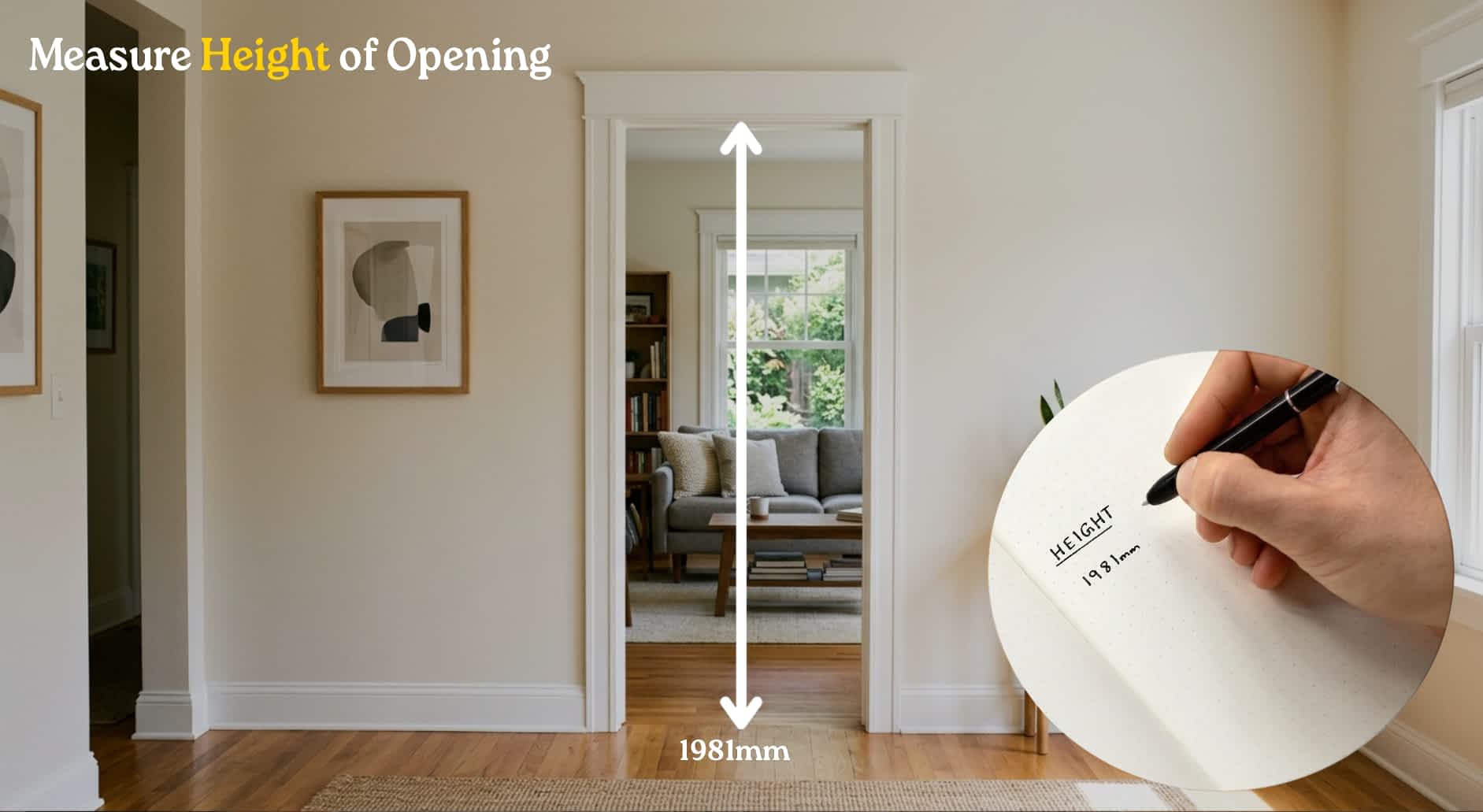
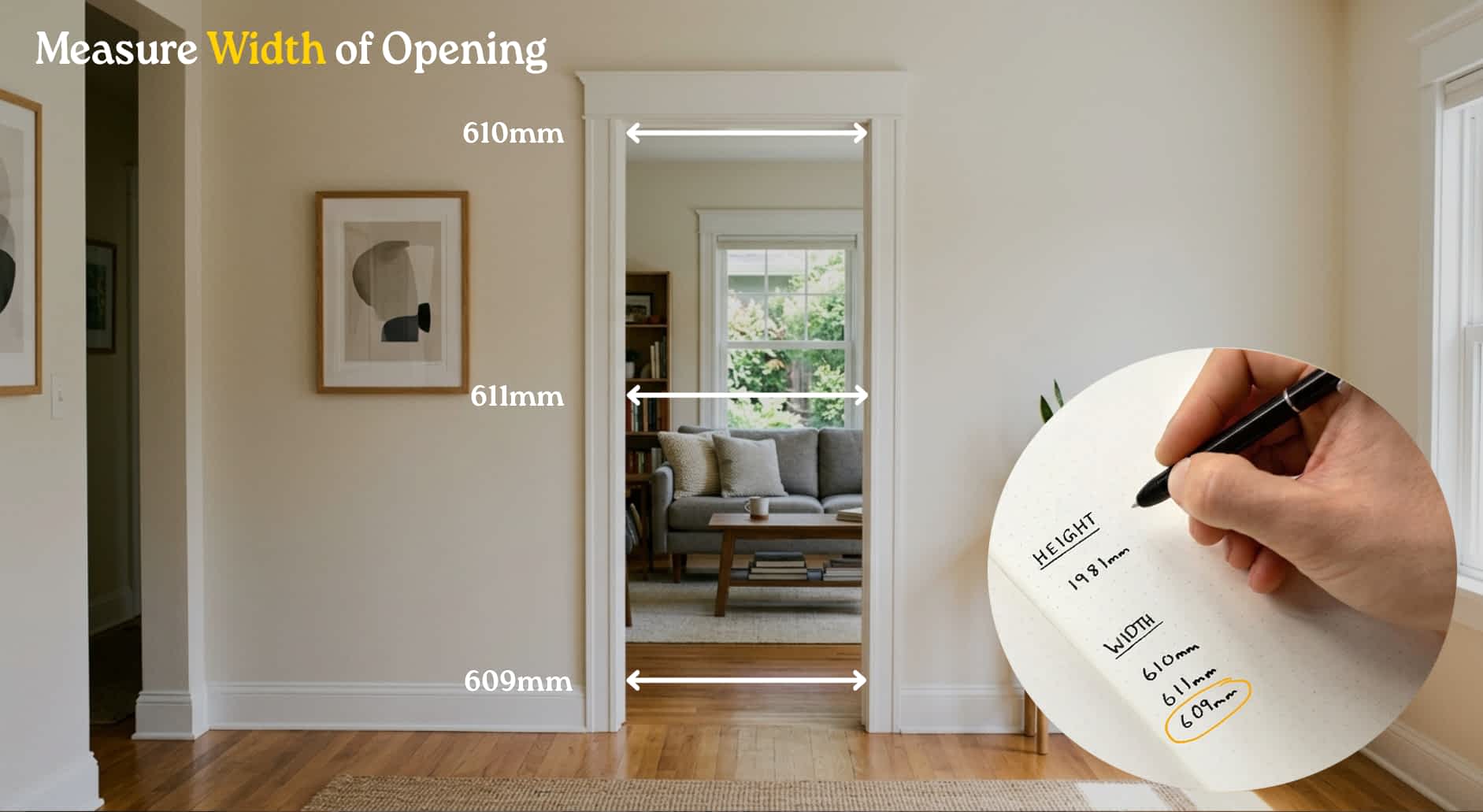
You’ll take three measurements in millimetres.
The length of:
The smallest measurement is your width.
Head to the product page for the door you’re buying and choose the size with the measurements that are closest to what you’ve written down.

If your opening is not square, then let your builder/installer/architect know. They will be able to make the necessary adjustments (Packing or trimming) to the door opening to make it square.
Older properties, and even newer builds, can suffer from shifting, leading to frames that are warped or out of plumb. By using the tightest point, you ensure the new door will actually fit into the opening without getting stuck or requiring massive structural alterations. If you order a door based on the widest measurement, it will need to be trimmed, which is more difficult than packing the frame to fit.
It’s unlikely that your measurements will exactly match our required opening measurements. There will most likely be some form of packing or trimming that needs to be done. This isn’t something that you will have to worry about, though. The installer/ fitter/ carpenter who fits the doors will do this for you.

Written by Katja
20th July 2026
Written by Katja
20th July 2026
Our family values mean honest advice, real conversations, and help when you need it.
All of our products are delivered safely and reliably to any Mainland UK postcode.
Our expert support team are always on hand to answer your questions. Drop us a line today.
Unit 2, Hayleys Manor Farm, Upland Road, Epping Upland, Essex CM16 6PQ

What is the true cost of a primed door? Is pre-finished better? Find out which is best for
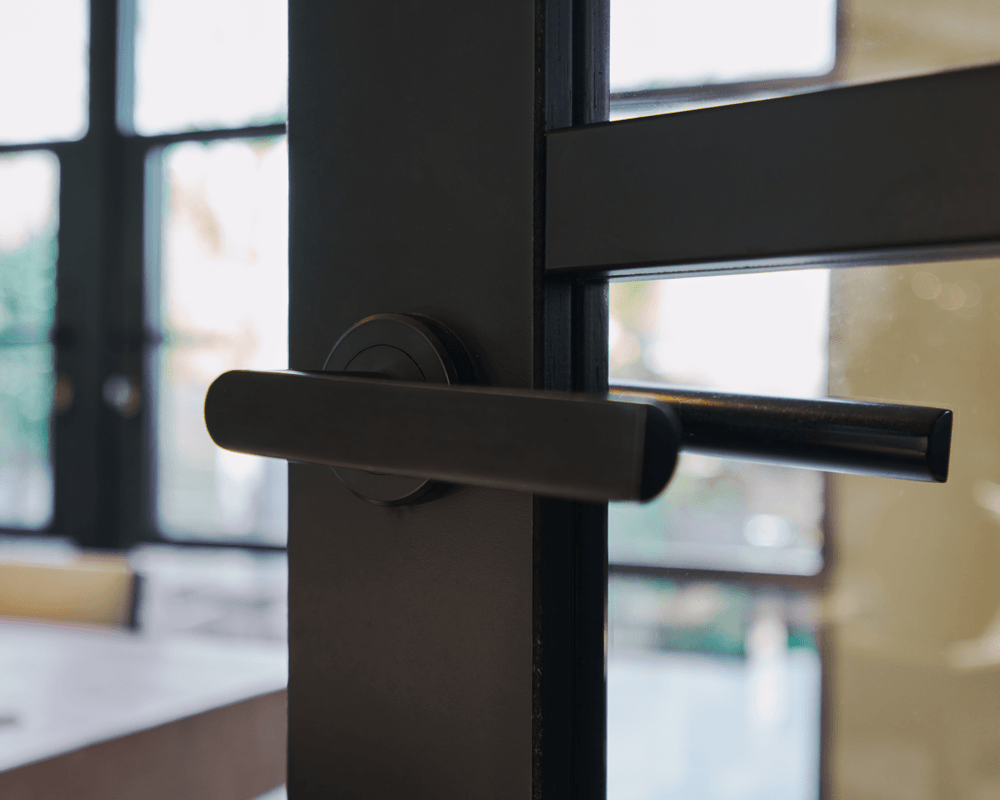
Hardware for internal doors is just as important as the door itself. After all, how are

When deep cleaning a home, the main things that come to mind are de-dusting the
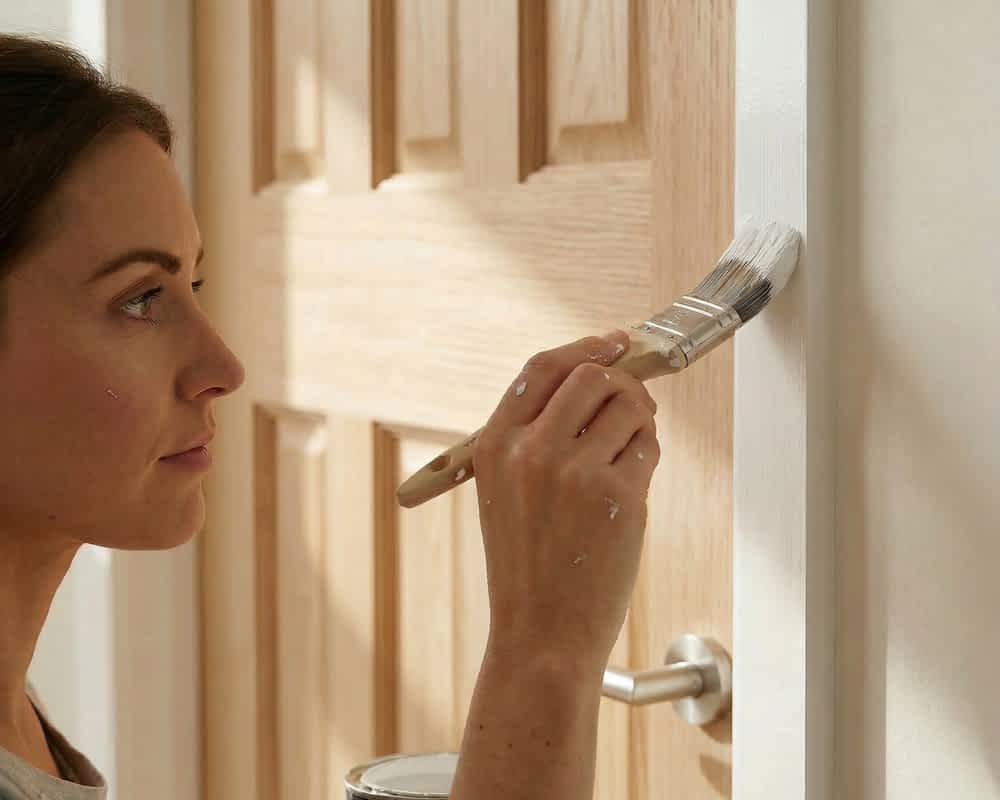
This guide is based on the assumption that you have wooden doors installed in your
Our family values mean honest advice, real conversations, and help when you need it.
All of our products are delivered safely and reliably to any Mainland UK postcode.
Our expert support team are always on hand to answer your questions. Drop us a line today.
You’ll need to trim mm off the left & right of each door
You’ll need to pack mm either side of the frame
You’ll need to trim mm off the top and bottom of each door
You’ll need to pack mm above
You’ll need to trim mm off the left & right of each door
You’ll need to pack mm either side of the frame
You’ll need to trim mm off the top and bottom of each door
You’ll need to pack mm above

If you found this article useful, please share!